December 31, 2018

Tete Montoliu / Jordi Sabates ‎– Vampyria (1974, LP, Spain)


Herrgottsax ‎– Seibold Seiergesichts Sündige Saxofone (1981, LP, Germany)


Songs
A1. Guten Morgen, Du Schöne (1:28)
A2. Adolf Und Martha: HerrGottSax! (3:22)
A3. Sabanone (Schlachtruf Der Affen) (14:03)
A4. Adieu? - Alles Klar (8:38)
B1. Man Nennt Mich Seiergesicht (5:32)
B2. Also Ich Weiß Es Nicht... (14:00)
B3. Wenn Es Nacht Wird In Stuttgart (Werden Die Gehsteige Hochgeklappt) (2:18)
B4. Tanz Der Giganten (4:00)

Musicians
Balafon – Butz Dähn
Bass – Capo Mayer, Horst Götz
Drums – Ringo Hirth
Guitar – Albert Mayer
Handclaps – Gerhild Lomer, Margret Breuning
Keyboards – Martin Schrack
Percussion – Fernand Fidore, Joe Koinzer
Piano – Helmut Weber, Wolfgang Dauner
Piano, Recorded By, Mixed By, Producer – Johannes Wohlleben
Piano, Synthesizer – Thomas Rabenschlag
Saxophone – Bernd Konrad
Saxophone, Flute, Marimba, Vocals, Written-By, Composed By, Arranged By, Recorded By, Mixed By, Producer – Büdi Siebert
Trombone – Uli Gutscher
Trumpet, Flugelhorn – Klaus Osterloh
Vocals – Anne Haigis, Gritje Lomer, Niels Lomer

Ennio Morricone ‎– Psichedelico Jazzistico (Original Soundtrack) (2004, CD, Italy)

December 30, 2018

Daniel Lentz ‎– Missa Umbrarum (1985, LP/CD, Usa)


Songs
1. O-Ke-Wa (13:46)
2. Missa Umbrarum (22:42)
3. Postludium (8:10)
4. Lascaux (9:11)

Egberto Gismonti ‎– Corações Futuristas (1976, LP/CD, Brazil)


Egberto Gismonti: Arp Odyssey II, Arp Strings, Mutron Bi-phase, Piano Fender Rhodes, Space Echo, Violao, Voz
Robertinho Silva: Bateria, Percussion
Luiz Alves: Contrabaixo
Danilo Caymmi: Flauta
Mauro Senise: Flauta
Nivaldo Ornelas: Flauta, Saxofone

1.Danca Das Cabecas
2.Cafe
3.Carmo
4.Conforme A Altura Do Sol
5.Polichinelo
6.Trem Noturno
7.Ano Zero
8.Baiao Do Acordar


Toto Blanke ‎– Electric Circus (1976, LP, Germany)


Side A
A1. PPG (6:06)
A2. Flowers All Over (6:16)
A3. Arabab (5:52)
Side B
B1. Minister Ed (7:37)
B2. Song for Zeenat (3:59)
B3. Spiesser Krollak (4:32)
B4. Spinner (2:03)

Musicians:
Bass – Dave King (tracks: A2 to B2)
Drums, Percussion – Edvard Vesala (tracks: A1 to A3)
Keyboards – Jasper Van't Hof (tracks: A1 to B3)
Producer – Ulli A. Ruetzel
Synthesizer, Sequencer, Guitar, Synthesizer [Moog Bass], Banjo, Producer – Toto Blanke

Paolo Tofani & Claudio Rocchi ‎– Un Gusto Superiore (1980, LP, Italy)


Lato A
A1. Jaya Shrila Gurudeva Bhagavan (5:25)
A2. O sei parte del problema o sei parte della soluzione (4:25)
A3. Dio (3:25)
A4. La macellazione (3:14)
Lato B
B1. Un gusto superiore (3:13)
B2. Introduzione (0:50)
B3. Muoiono (3:05)
B4. Jiv Jago (10:03)

Musicians
Claudio Rocchi/ performer, songwriting, producer
Paolo Tofani/ performer, songwriting, producer
M. Harris/ bass, piano
Mauro Spina/ drums
Paolo Donnarumma/ bass
Beppe Sciuto/ drums
Srila Bhagavan Goswami/ tampoora


Paolo Tofani & Claudio Rocchi
Un Gusto Superiore
di Francesco Mendozzi

Que­sto è un disco che in po­chis­si­mi co­no­sce­ran­no ma che poi tanto raro non è, visto che in al­cu­ni mer­ca­ti­ni del vi­ni­le è an­co­ra pos­si­bi­le re­pe­rir­lo spen­den­do una cifra più che de­cen­te. Io me lo tro­vai tra le mani molti anni or sono, dopo che mio padre aveva feb­bril­men­te ac­qui­sta­to di tutto a Porta Por­te­se. L’i­dea di base di que­sto la­vo­ro sta nella ve­ne­ran­da isti­tu­zio­ne del­l’As­so­cia­zio­ne In­ter­na­zio­na­le per la Co­scien­za di Kri­sh­na, punto di par­ten­za di tanto in­dui­smo oc­ci­den­ta­le. Senza ombra di dub­bio, per dirla alla Guc­ci­ni, quel­li erano gli anni in cui dalle pro­te­ste gio­va­ni­li si pas­sa­va «alle magie di moda delle re­li­gio­ni orien­ta­li che da noi na­scon­do­no sol­tan­to vuoti di pen­sie­ro». Fatto sta che il disco è molto bello: me­ri­to di Paolo To­fa­ni, gran­de chi­tar­ri­sta degli Area ai tempi di “Ar­beit Macht Frei”, e di Clau­dio Roc­chi, ca­val­lo pazzo dello spe­ri­men­ta­li­smo ita­lia­no, con col­la­bo­ra­zio­ni che spa­zia­no dal beat degli Stor­my Six de “Le idee di oggi per la mu­si­ca di do­ma­ni” al Bat­tia­to di “Juke Box”.

Tutto co­min­cia con l’e­le­gia di “Jaya Srila Gu­ru­de­va Bha­ga­van”, men­to­re della spi­ri­tua­li­tà karma, in cui i due mu­si­ci­sti si ci­men­ta­no in una dol­cis­si­ma bal­la­ta pop con con­ta­mi­na­zio­ni orien­ta­leg­gian­ti di flau­to, con Mauro Spina che alla bat­te­ria com­pie un la­vo­ro ec­ce­zio­na­le. Ma è su­bi­to la volta del pezzo forte: “O sei parte del pro­ble­ma o sei parte della so­lu­zio­ne”, ti­to­lo più che espli­ca­ti­vo per un brano in­cen­tra­to sul tema del­l’e­qui­li­brio uni­ver­sa­le. Mu­si­cal­men­te ci tro­via­mo di fron­te ad una stu­pen­da can­zo­net­ta dal sa­po­re funky, me­ri­to del basso di Paolo Don­na­rum­ma, della bat­te­ria di Beppe Sciu­to e di pri­mor­dia­li sin­te­tiz­za­to­ri dal suono im­ma­tu­ro ma de­ci­so. I ritmi del mondo e della na­tu­ra tor­na­no in “Dio”, una poe­sia di as­so­lu­ta pie­nez­za spi­ri­tua­le, dove l’Uno è sem­pli­ce­men­te ac­com­pa­gna­to da una chi­tar­ra acu­sti­ca che ne ca­den­za le fat­ti­spe­cie ter­re­ne. Il lato A ter­mi­na con “La Ma­cel­la­zio­ne”, espli­ci­ta con­dan­na verso l’e­sa­ge­ra­to con­su­mo di carne, fi­glia di un pen­sie­ro re­li­gio­so che in­vi­ta a pro­va­re em­pa­tia verso le be­stie ma anche di una dot­tri­na scien­ti­fi­ca che prova la messa in cir­co­lo di tos­si­ne negli ani­ma­li ma­cel­la­ti, tos­si­ne che poi en­tra­no in con­tat­to col no­stro or­ga­ni­smo. Qui il sound è de­ci­sa­men­te elet­tro­ni­co, col basso di Mark Har­ris che rende in­cal­zan­te il ritmo e gra­zie al quale anche il testo di­ven­ta un ar­rab­bia­to ana­te­ma verso la ne­gli­gen­za del­l’uo­mo mo­der­no.

La se­con­da fac­cia­ta del disco parte dalla ti­tle-track, mo­vi­men­ta­tis­si­ma bal­la­ta rock sulla ri­cer­ca di una terza via, di un più alto gusto della vita, ov­ve­ro di una ri­cer­ca tesa a di­sco­pri­re il senso es­sen­zia­le delle cose. I suoni messi in campo da Roc­chi e To­fa­ni vanno dal soft rock fino a certe ri­mem­bran­ze disco che fanno pen­sa­re al mi­glior Gior­gio Mo­ro­der. Dopo una bre­vis­si­ma e psi­che­de­li­ca “In­tro­du­zio­ne” ri­par­te il di­scor­so re­li­gio­so, sta­vol­ta meno vi­sio­na­rio, con una trac­cia so­cial­men­te im­pe­gna­ta sul­l’i­nu­ti­li­tà di tante morti co­sid­det­te bian­che. “Muo­io­no” si pre­sen­ta mu­si­cal­men­te ef­fer­ve­scen­te con un can­ta­to piut­to­sto ri­cer­ca­to; il tap­pe­to chi­tar­ri­sti­co si pre­sta bene ai tetri in­ser­ti di synth. Qui i no­stri con­dan­na­no l’a­bor­to, la vio­len­za, la droga, la guer­ra, il nu­clea­re, la ca­re­stia e tutto ciò che im­pu­ne­men­te causa la morte e la di­stru­zio­ne del ge­ne­re umano. Brano fi­na­le del disco è il lungo tun­nel men­ta­le di “Jiv Jago” (in ita­lia­no “Sve­glia­te­vi”), in­te­ra­men­te per­for­ma­ta da Srila Bha­ga­van Go­swa­mi che, tra l’al­tro, suona anche la tam­pou­ra.

Un Gusto Su­pe­rio­re” è una pre­zio­sis­si­ma gemma della mu­si­ca ita­lia­na, una lente d’in­gran­di­men­to su come noi oc­ci­den­ta­li po­trem­mo in­ten­de­re, mu­si­cal­men­te e cul­tu­ral­men­te, l’u­ni­ver­so di Kri­sh­na, Shiva e Brah­ma.

December 13, 2018

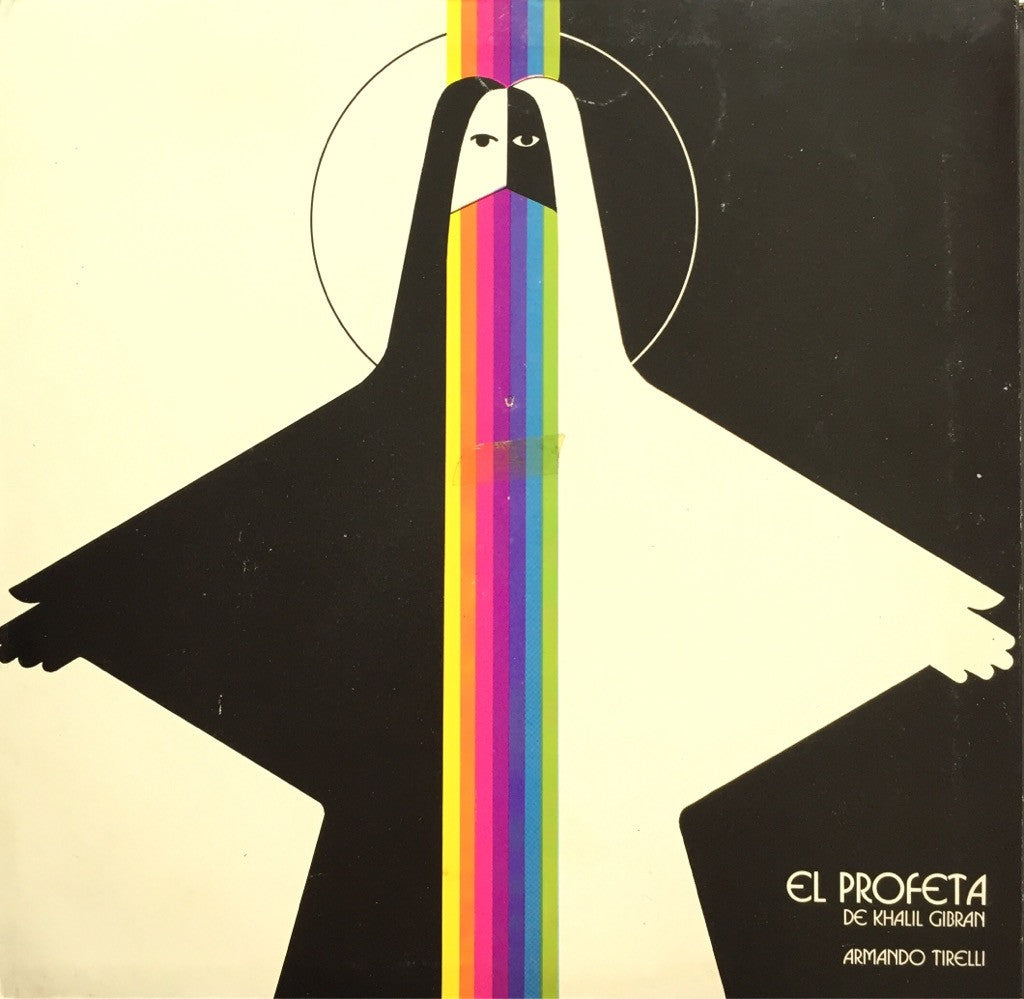
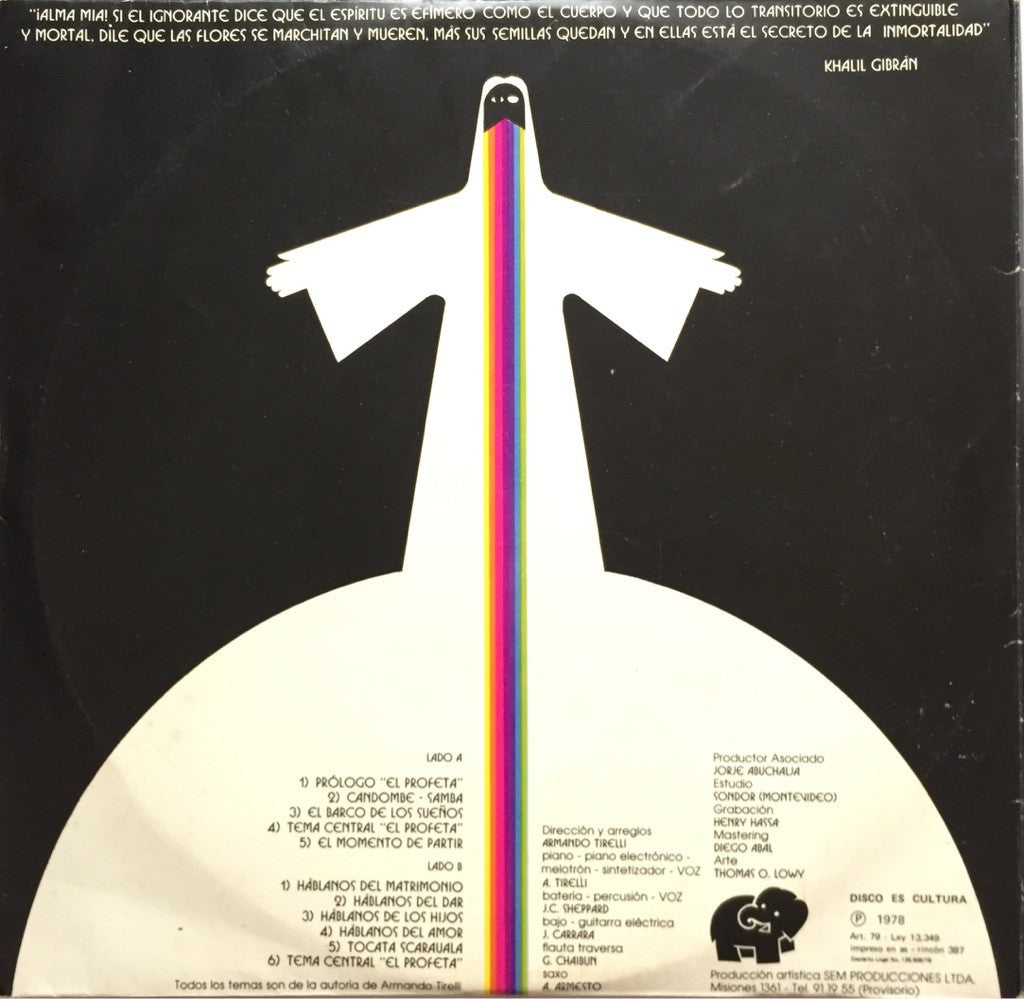
Armando Tirelli ‎– El Profeta (1978, LP/CD, Uruguay)

Armando Tirelli / El Profeta
Songs / Tracks Listing
1. Prologo El Profeta (8:26)
2. Candombe Samba (4:52)
3. Barco de los Suenos (2:27)
4. Tema Central El Profeta (2:06)
5. El Momento de Partir (1:46)
6. Amanever en Orphalese (2:40)
7. Hablanos del Matrimonio (5:28)
8. Hablanos del Dar (3:09)
9. Hablanos del Amor (3:45)
10. Los Ecos de Almustafe (3:28)
11. Hablanos de los Hijos (4:59)
12. Tocata Scarahuala (0:34)
13. Tema Central El Profeta (1:46)

Musicians
Armando Tirelli/ piano, mellotron, organ, synthesizer, vocals
J. C. Sheppard/ drums
Ricardo Bozas/ drums
J. Carrara/ bass
G. Bregstein/ sax, flute
G. Chaibun/ flute
Rody Troccli/ guitar

One of the most obscure synth prog album in Uruguay. very unique mixing style with prog, psych, folklore, symphonic and causes south american vibes.

St. Erhart ‎– Paprika (1980, LP, France)


Side A
A1. Paprika (4:45)
A2. Ibiza (5:23)
A3. Lune Noire (5:49)
Side B
B1. Cuando Se Come Aqui (7:28)
B2. Hersch (4:50)
B3. Schprotz (5:45)

Musicians
Philippe Geiss/ tenor saxophone, alto saxophone, soprano saxophone, maracas, composer
Emmanuel Séjourné/ vibraphone, marimba, piano, bell tree, composer
Claude Boussard/ bass, composer
Gilles Fontan/ drums, cowbell, triangle, Vibra-Slap, composer

SAINT-ERHART produced an original, forceful jazz-rock album in the same vein as Serge BRINGOLF. Their music is powerful, rigorous, violent reaching perfection as far as technique and melodies are concerned and based on a solid rhythmic section, the sounds and inspired passages from the brass section and the complexity of themes and arrangements. SAINT-ERHART offers energetic carefully worked-out and captivating compositions during which Emmanuel SEJOURNE's vibraphone and Philippe GEISS's sax vie with each other in terms of virtuosity and inspiration. An excellent album which shows what original jazz-rock can be, technical and lyrical at one and the same time.

December 08, 2018

Lach'n Jonsson ‎– Songs From Cities Of Decay (1989, LP, Sweden)


Songs:
1. Han Sång ... (He Saw ...) (3:33)
2. Stad (City) (3:37)
3. The Song Of The Rats (2:38)
4. Askvarelsen (Creature Of Ashes) (2:16)
5. Ur Träsken Och Skogarna (Out Of The Swamps And Forests) (2:52)
6. Vindens Sång (The Song Of The Wind) (2:42)
7. Livskänslan (The Feeling Of Life) (1:47)
8. Tomma Bakgårdar (Empty Backyards) (2:41)
9. Intermezzo: Andning (Breath) (1:05)
10. Monument (Monuments) (24:11)

Musicians
J. Lachen aka Lars Johnsson/ All Instruments, Vocals, Composer, Arranger, Producer

Song From Cities of Decay is more feathery or better said atmospheric, less busy, more delicate when comparing it to predecessor and incorporates plethora of menacingly hovering sounds. It is bridge between MFtDF and sounds of Ur Kaos. From the first listen I know this is one of the most important records in European progressive music, along with RIO releases. However this one again is not falling squarely into RIO genre, but it has some ties to it. Things are going from grave to sable, all throughout sombre or downright exalted (anthemic vocals of Lach’n make a great contribution to that), bordering on the plaintive rather than on devilishly mocking, so don’t expect the titter of UZ’z muses here. Lach'n is playing all instruments and had carefully sung all vocals of its own, producing gorgeous harmonies and strange counterpoint not heard since the era of shining Gregorian chorales. Here it is hard to detect accurately certain instruments, because the music immediately pulls you into into itself, let you inertly watching how your body swirls in it, but also allows you to take a breath with each new track. And lets you do nothing more. Tracks are mostly short, ranging from minute and half to three minutes and half, until you came in front of the portal of "Monuments", a 24+ minute long symphony; on the original LP, the whole side B. Lach'n's composing and performing skill leads you through succinct and effective themes, again from medieval to chamber to industrial, ambiental if you like and back to barocco-classical. Words fail me, or better said they seemed quite useless, as it seems I'll never manage to describe the exquisiteness of these records. If description would be inevitable, I’d say this is superb Hyperborean avant-rock. Both albums are indispensable for any serious fan of progressive music. -- (Nenad Kobal - www.gepr.net)

December 07, 2018

Gaetano Liguori Idea Trio ‎– I Signori Della Guerra (1975, LP, Italy)


Side A
A1. I Signori Della Guerra (8:05)
A2. Garabongo (6:16)
A3. Don Mario Blues (3:49)*
Side B
B1. Tarantella Del Vibrione (6:31)
B2. Inco (5:14)
B3. Viva La Cassa Del Mezzogiorno (5:50)**

Musicians:
Bass – Roberto Del Piano
Drums – Filippo Monico
Piano, Composer – Gaetano Liguori

*Tarantella del vibrione (“vibrio’s tarantella” – in 1973 a huge cholera epidemic hit Naples and other cities in Southern Italy, but the track is actually dedicated to Roberto Franceschi, a 21-year old student shot dead by the police in Milan during a demonstration on January 23rd, 1973)

**Viva la Cassa del Mezzogiorno (“up with the Cassa del Mezzogiorno” – Cassa del Mezzogiorno, “Mezzogiorno’s bank”, was a publicly held bank established in the Seventies to finance development projects in Southern Italy, soon infiltrated by mobsters)
Gaetano Liguori Idea Trio, I signori della guerra (1975)
(A review by laltritalia.wordpress.com)

Back in the Seventies the existence – and the significance – of a politically engaged, militant jazz could have been pretty obvious in the States, or Africa, or elsewhere outside Italy, but certainly not here, where traditionalist and stiff connoisseurs audiences regarded it rather as a wicked contamination with earthly matters.

Gaetano Liguori – a classicaly trained pianist and composer – was among the first italian jazz musicians to address directly “the heavy human condition of destitutes, deviants and oppressed people at every latitude”, as this record’s liner notes read, bringing jazz to the revolutionary masses by playing thousands of gigs at factories, schools, universities, squatted places and pop festivals.

I signori della guerra (“the lords of war”), credited to his Idea Trio, came after their controversial debut album Cile libero, Cile rosso (“free Chile, red Chile”), and kept on the same path, combining free outbursts with quieter and atmospheric piano tunes and folk hints. The combo featured Filippo Monico on drums and Roberto Del Piano on bass.

In 1976 Liguori recorded, together with the poet-worker Giulio Stocchi, Demetrio Stratos, his father Pasquale Liguori on drums and some other fellow musicians La cantata rossa per Tall El Zataar (“the red cantata for Tall El Zaatar”), which recalled the huge massacre of Palestinian refugees by the hand of christian phalangists happened in Eastern Beirut earlier that year.

A version of “Tarantella del vibrione” featuring Tullio De Piscopo on drums and recorded at the Demetrio Stratos’ tribute concert in Milan, June 6th, 1979, is available in the legendary 1979 il concerto Cramps live album.

December 04, 2018

Calliope Quartet ‎– Incognita (1998, Cassette, Hungary)


Calliope was a short-lived Hungarian Jazz-Rock and experimental folk outfit that consisted of Molnár Tamás on bass, Pásztohy Bálint on drums, Hűvösvölgyi Péter on guitar and Bonyár Judit on cello and vocals. They released this one cassette only album on the Hungarian Crossroads Records. A label that tried to merge the genres of folk, jazz and world music with the contemporary sounds of the nineties.

Incognita that was recorded in 1997 is a stunning album balancing somewhere on the crossroads of rock in opposition, jazz-rock and even hinting towards Hungarian folk music at times. Within a Hungarian context they probably come closest to the RIO group Kampec Dolores, known for their combination of avant-rock, folk and improvisation. The tracks on Incognita are quite lengthy and leave lots of room for the listener to enter the musical world of the band. The tracks have nice abstract and sometimes humoristic titles like Aszimmetrikus Fémbuborék (Asymmetrical Metal Bubble) or Jelmezbál Jazzsznoboknak (Costume Ball For Jazz Snobs). The band plays great quality music, but doesn't lose its approach to have fun while playing. Also they don't portray themselves as academic jazz musicians.

This is actually a great album from Hungary and already nearly impossible to find after just two decades that have passed. (Review by archaicinventions.blog)

December 01, 2018

Música Urbana/Blay Tritono/La Rondalla de la Costa ‎– Banda Sonora De La Pel.licula: Primera Aventura De Pepe Carvalho "Tatuaje" (1976, LP, Spain) Re-up!

Coma ‎– Amoc (1980, LP, Denmark)


COMA formed in 1971 in Frederikshavn with some of the ex-members of the band Ramasjang, and some of the earliest members were Uffe Markussen, Flemming Friberg and Jakob Mygind. The stable line-up of the band was made in 1973 with the addition of Klaus Thrane, Viggo Bertelsen and Leif Christensen, with whom they made their debut Financial Tycoon in 1977. The complicated sound of this avantgarde jazz rock band is harder to describe, which is seen in their taste of musicians they apreciate: King Crimson, John Coltrane, Frank Zappa and Jimi Hendrix; and it can be heard on Financial Tycoon that they were not strangers to some eastern music as well. After their debut they released Amoc in 1980, and not limited to music, they were active in local political activities in Frederikshavn and remained active through the early 80's releasing some singles. COMA can be recommended to people who like their already mentioned role models (especially Zappa, their instrumental and lyrical inspiration) and music with some similarities to National Health, Gong and Supersister. (Progarchives)

Tullio De Piscopo ‎– Vol. 2 (1976, LP, Italy) Re-up!


original post
Re-up by request

André Demay ‎– Generic (1980, LP, France)


Side A
A1. Generic Cycle (5:50)
A2. Nervous Structure (4:50)
A3. Musical Syntax (4:20)
A4. Sybarite Island (4:50)
Side B
B1. Private Entrance (5:15)
B2. Telepathically Yours (4:30)
B3. Razzia Man (4:35)
B4. Automatic Stop (5:00)

Musicians:
Guitars - Andre Demay
Bass – Jannick Top
Drums – Joe Hammer
Guitar – André Demay
Other [Artwork] – Razzia
Percussion – Fred Desplan
Producer – André Demay, Paul Scemama
Synthesizer – Celmar Engel